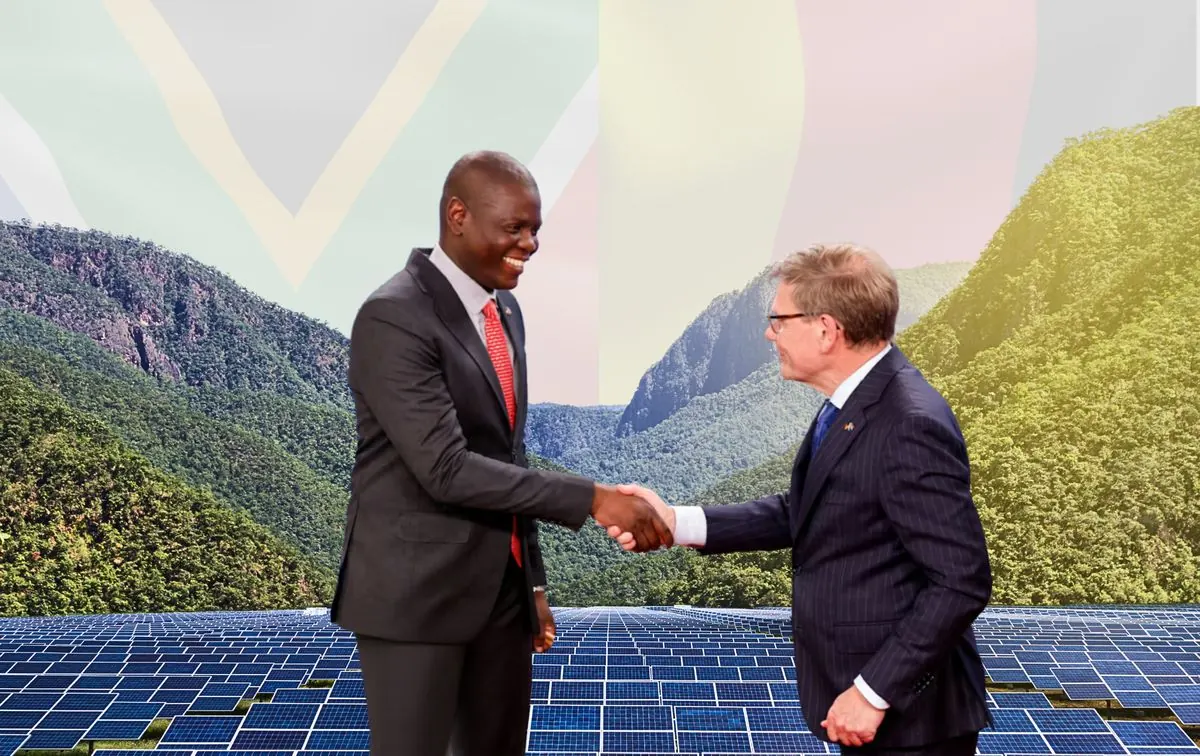
On 13 April 2026, South African Minister of International Relations and Cooperation, Ronald Lamola, and his German counterpart, Johann Wadephul, finalised a significant climate agreement in Berlin. During the 12th Meeting of the German-South African Bi-National Commission (BNC), Germany pledged a combined R8.9 billion (€470 million) to support South Africa’s transition to a low-carbon economy.
The agreement establishes a comprehensive financial and technical framework that moves beyond simple cash transfers to address systemic energy challenges. It encompasses a major loan, a dedicated finance facility and a strategic Inducement Prize.
The Concessional Climate Loan (R3.8 billion)
The core of the agreement is a R3.8 billion (€200 million) concessional loan managed by the German development bank KfW. This instrument provides the South African government with capital at below-market interest rates tied to specific sustainability and development targets. By leveraging government-backed guarantees and development finance institution participation, the facility reduces borrowing costs, yielding annual savings of 2% - 4% over commercial alternatives. The capital is allocated to the National Transmission Company of South Africa (NTCSA) to initiate a rollout of 14,000 km of new transmission lines by 2032. This expansion modernises renewable energy infrastructure and grid stability whilst unblocking current grid-locked projects to reduce national carbon emissions.
The Finance Facility (R5.1 billion)
A new Finance Facility will manage more than R5.1 billion (€270 million) in combined German and European Union funding under the Global Gateway framework. This facility provides de-risking capital, such as grants and low-interest equity, to private sector projects in the green hydrogen and battery value chain sectors. It specifically prioritises companies building first-generation electrolysers and battery plants, ensuring the energy transition includes robust storage, conversion and export capabilities.
General information only. It is not legal, tax or investment advice. Speak to a qualified adviser before you act on it.